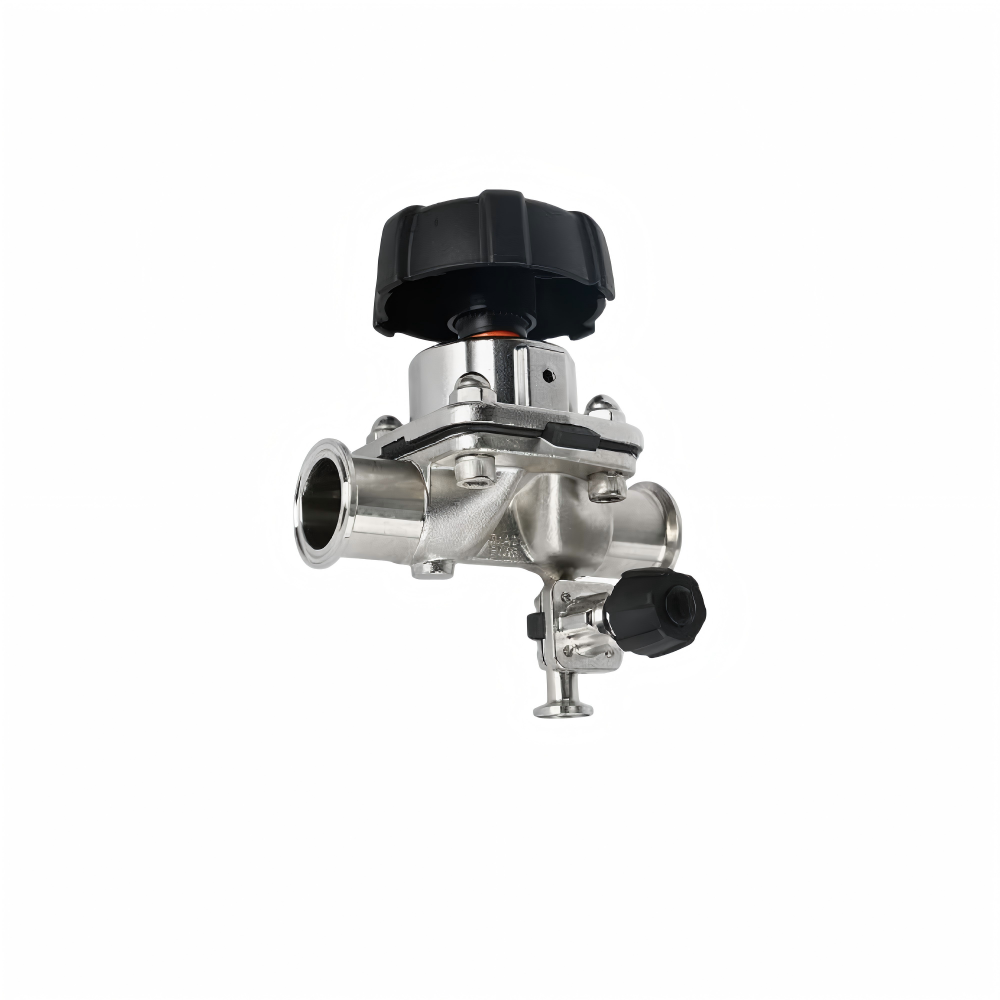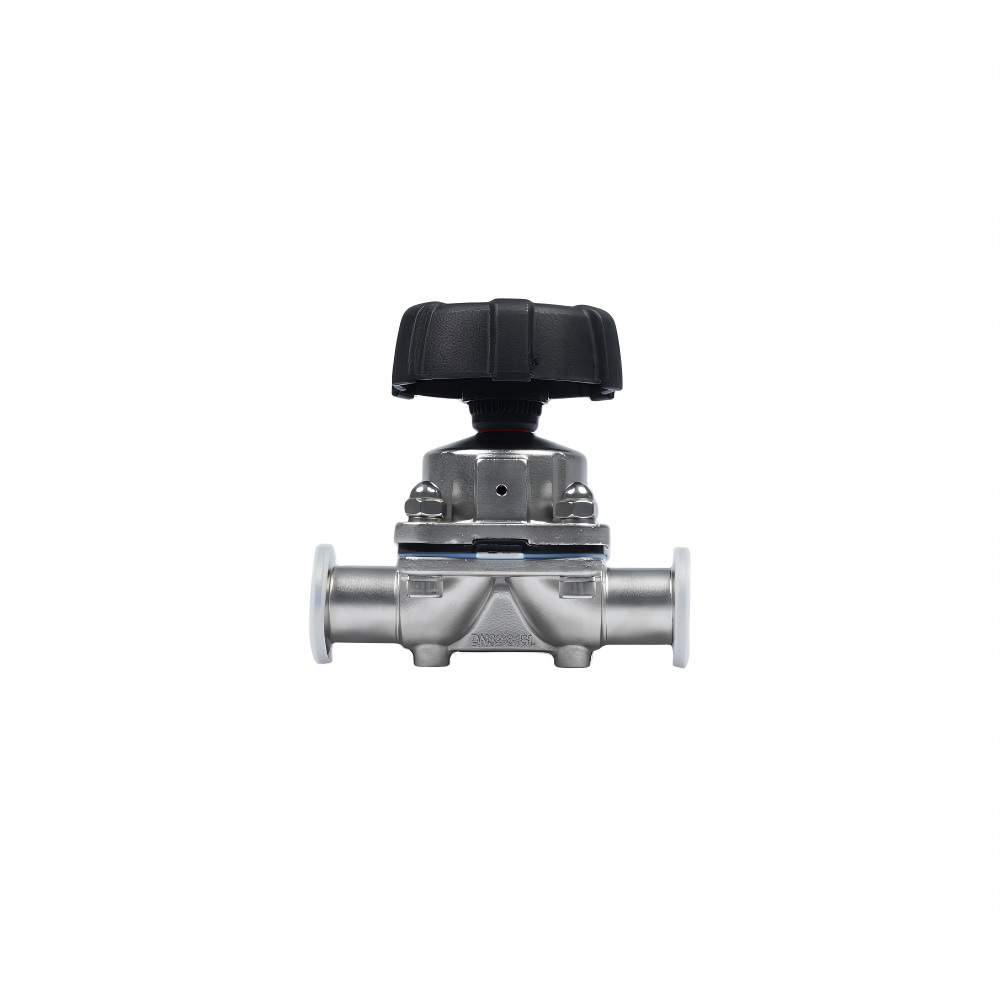
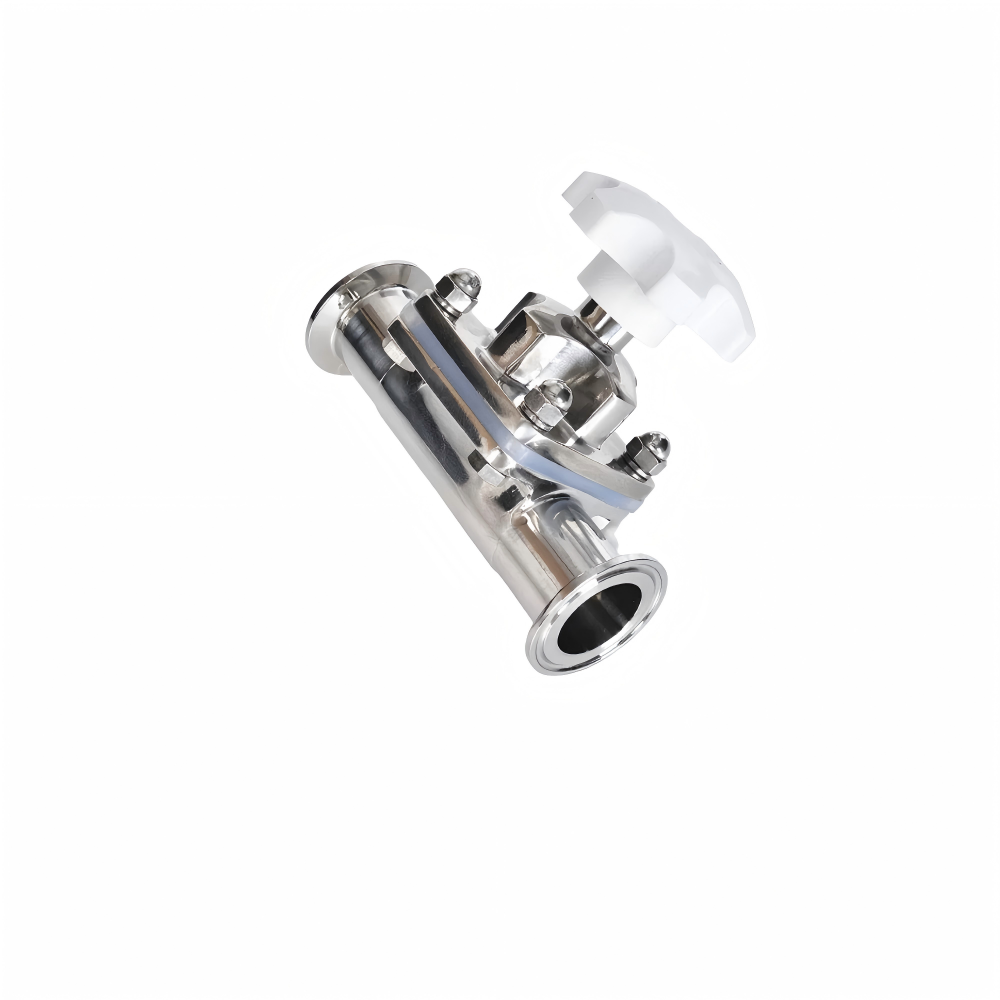
Sanitary Clamp Diaphragm Valve
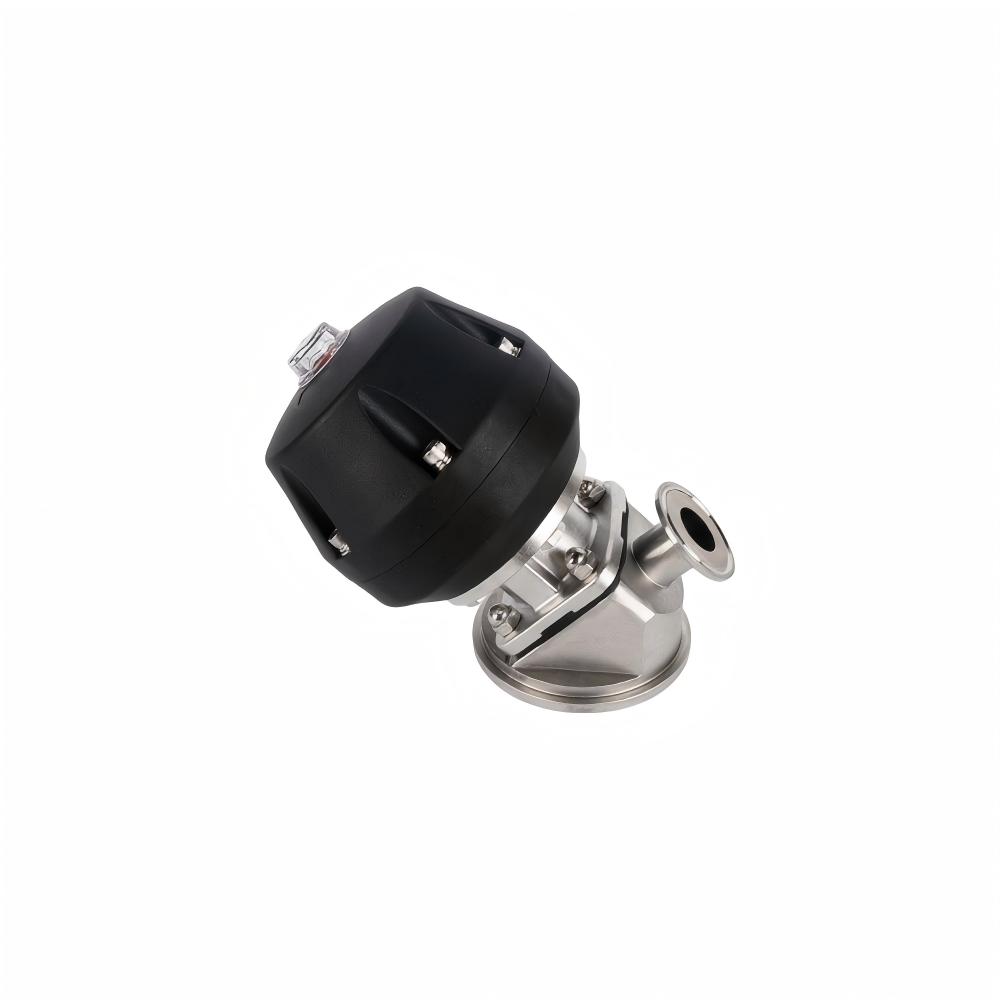
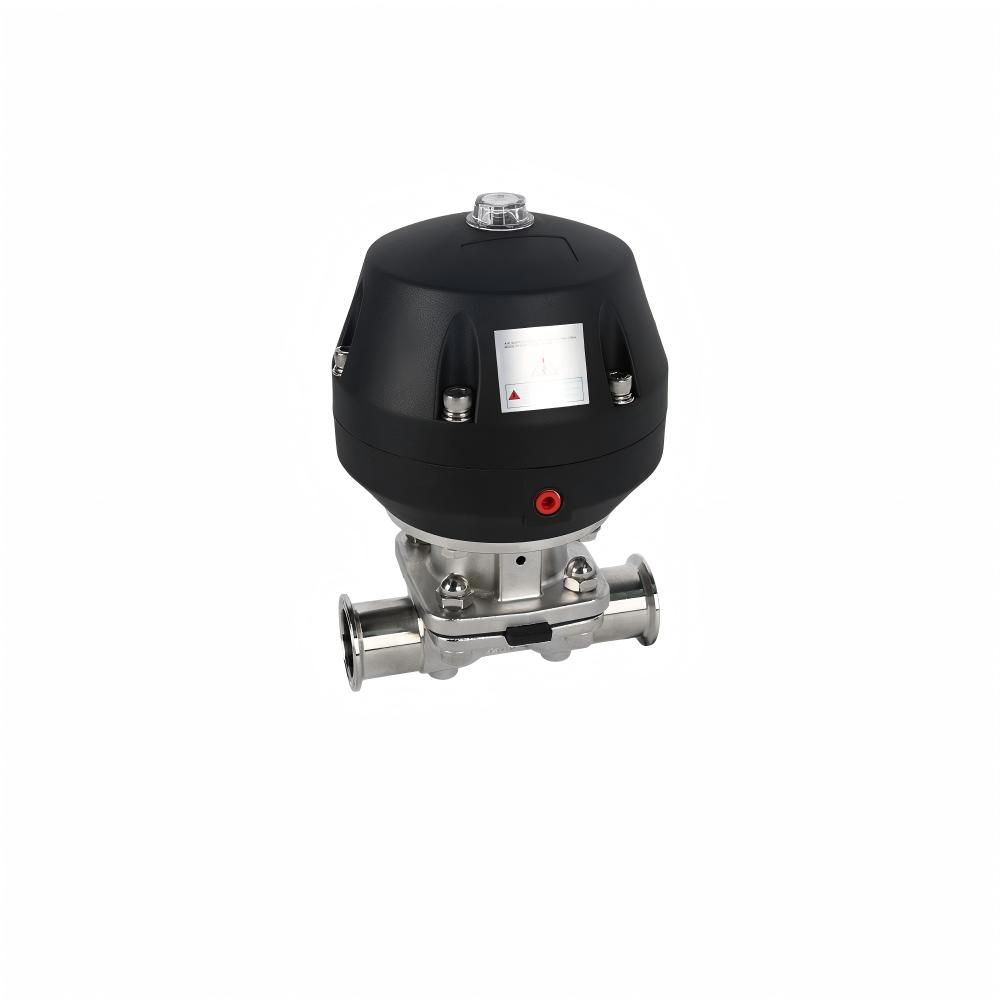
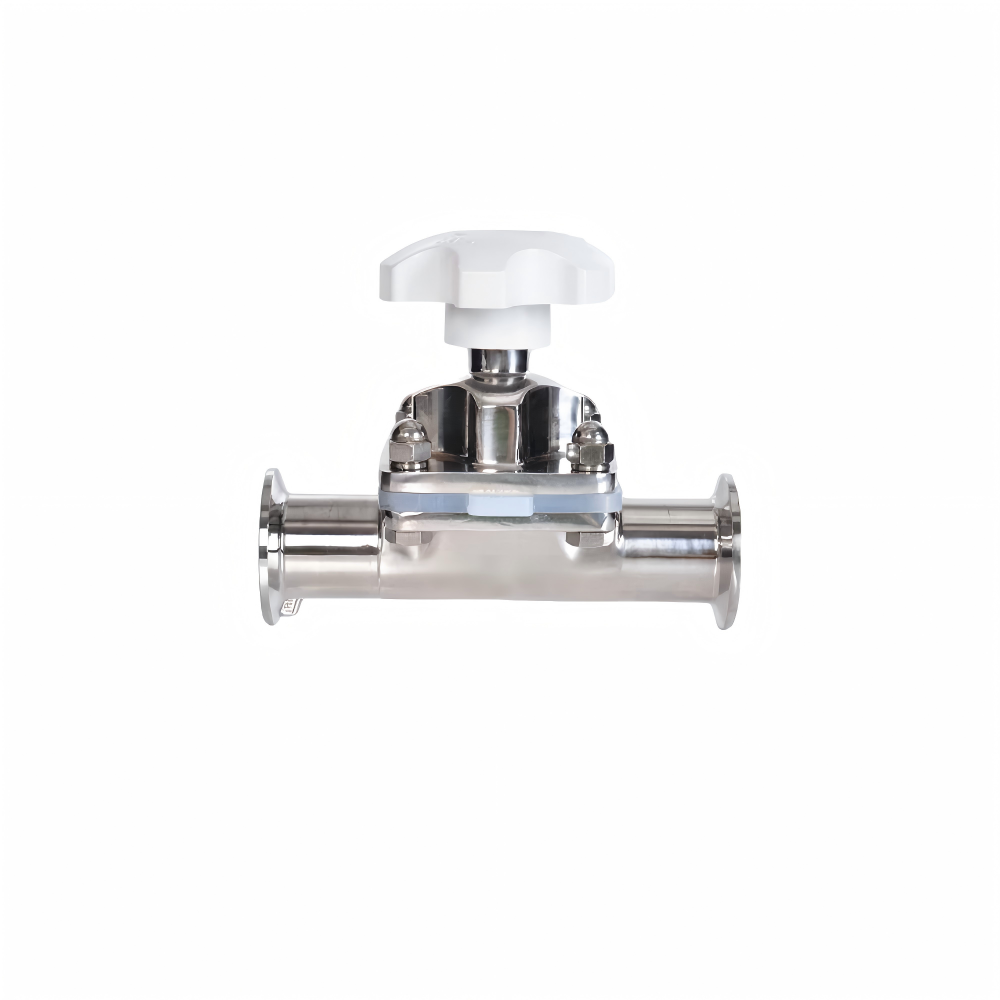
KINGMAN supplies sanitary clamp diaphragm valves. Adopting tri-clamp connection for simple installation and rapid disassembly for cleaning. Made of 316L stainless steel, its weir-type flow path reduces medium retention. Diaphragm sealing eliminates packing leakage points and complies with GMP and FDA sanitary standards. It can be flexibly integrated into various sanitary piping systems for clean fluid pipelines of food, dairy and beverage industries and supports in-line cleaning. Manual or pneumatic actuation options are available. EPDM and TFM diaphragms are offered to adapt to varied temperatures and media.
Specifications
| Parameter | Value |
|---|---|
| Product Type | Sanitary Diapharagm Valve |
| Size Range | DN15–DN100 (approx. 1/2"–4") |
| Body & Disc Material | 316L stainless steel |
| Seal Material | EPDM / EPDM+PTFE |
| Surface | Inner surface: Ra ≤0.5μm (SF1), Ra ≤0.375μm (SF4) , Outer surface: Sand blasting |
| Working Temperature | 150 °C |
| Max. Working Pressure | Max 10 Bar for DN15‑DN50; Max 6 Bar for DN65‑DN80 |
| Min. Working Pressure | Full vacuum (with EPDM seal) |
| Connection Standard | 3A / SMS / DIN / ISO /ASME BPE |
| Connection Type | Tri-Clamp / Weld / Threaded / Flange (please confirm) |
| Operation Type | Manual handle / Pneumatic actuator |
| Certification | ISO 9001, 3A,CE,EAC,health wading license |

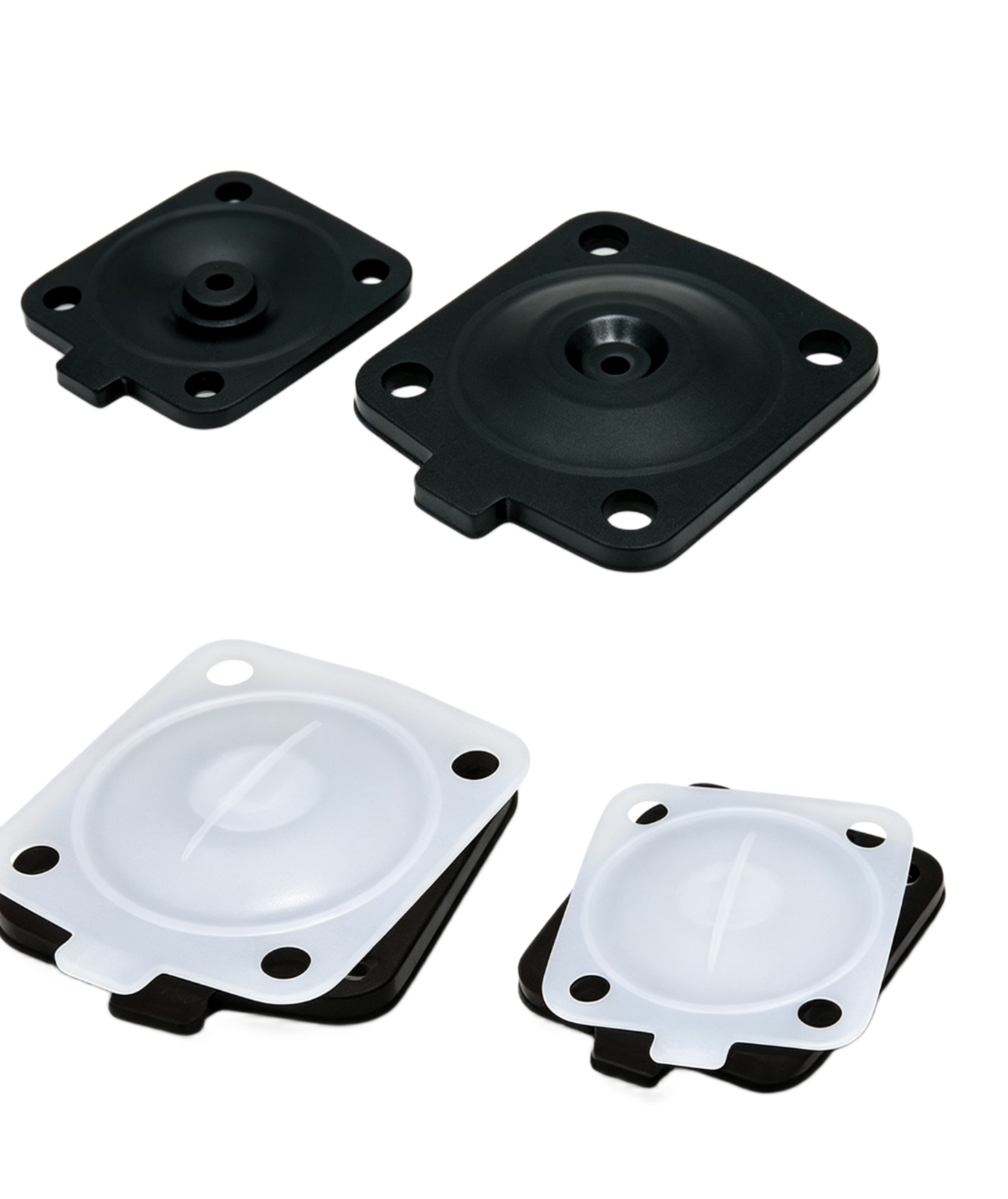
Diaphragm
Different from the traditional diaphragm valve body, the aseptic diaphragm valve body has a sealing protrusion that tightly snaps on the inner diameter, which can reduce the annular gap between the diaphragm and the valve body. This feature of the diaphragm valve makes it particularly suitable for aseptic processe.
Diaphragm Material
Diaphragms are available in EPDM rubber and TFM rubber, with single and double diaphragms optional. The dual diaphragm design allows the two diaphragms to operate independently,which reduces tension caused by different thermal properties. Each application has different operating conditions and therefore different requirements for the diaphragm. To select the diaphragm that is best for you, consider the following factors: operating pressure, application temperature, process fluid. EPDM can be suitable for most application conditions, and some high-temperature conditions require the use of TFM material diaphragms.
Dimensions
3A / DIN / ISO Standard
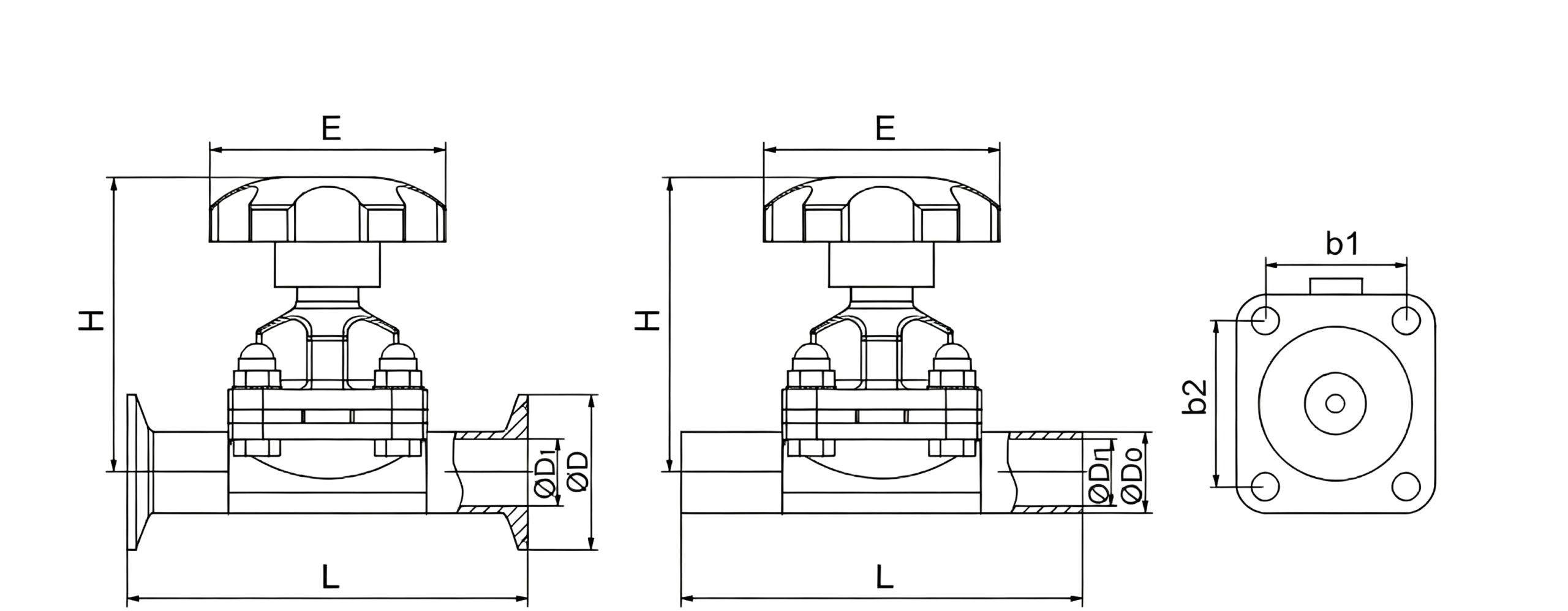
| Material Code | Size | D | Do | Dn | L | E | H | b1 | b2 |
|---|---|---|---|---|---|---|---|---|---|
| DM01DINCCHW6LEPP015 | DN15 | 25.2/34/50.5 | 19.1 | 16 | 110 | 80 | 100 | 34 | 44 |
| DM01DINCCHW6LEPP020 | DN20 | 34/50.5 | 22 | 19 | 118 | 80 | 105 | 41 | 51 |
| DM01DINCCHW6LEPP025 | DN25 | 50.5 | 25.4 | 22.4 | 130 | 80 | 110 | 46 | 56 |
| DM01DINCCHW6LEPP032 | DN32 | 50.5 | 31.8 | 28.8 | 150 | 80 | 115 | 54 | 62 |
| DM01DINCCHW6LEPP040 | DN40 | 50.5 | 38.1 | 35.1 | 160 | 120 | 135 | 64 | 71 |
| DM01DINCCHW6LEPP050 | DN50 | 64 | 50.8 | 47.8 | 190 | 120 | 145 | 74 | 81 |
| DM01DINCCHW6LEPP065 | DN65 | 77.5 | 63.5 | 59.5 | 210 | 140 | 175 | 87 | 87 |
| DM01DINCCHW6LEPP080 | DN80 | 91 | 76.2 | 72.2 | 220 | 140 | 185 | 92 | 105 |
| DM01DINCCHW6LEPP100 | DN100 | 119 | 101.6 | 97.6 | 288 | 160 | 245 | 142 | 153 |
Features
- Standard sanitary tri-clamp ends compatible with mainstream sanitary pipes on market, easy replacement without pipe modification.
- Material, polishing and structure comply with GMP and FDA sanitary standards for direct use in compliant food and pharmaceutical production lines.
- Optimized weir-type streamlined flow path reduces media retention and material loss for sanitary fluid transfer.
- Packing-free sealing design relying on flexible diaphragm, avoiding long-term leakage caused by packing wear.
- The same valve body can be fitted with manual or pneumatic actuator to match automatic or semi-automatic production lines.
- Unobstructed flow path supports in-place cleaning and high-temperature sterilization, full-line sanitization without disassembly..
Working Principle
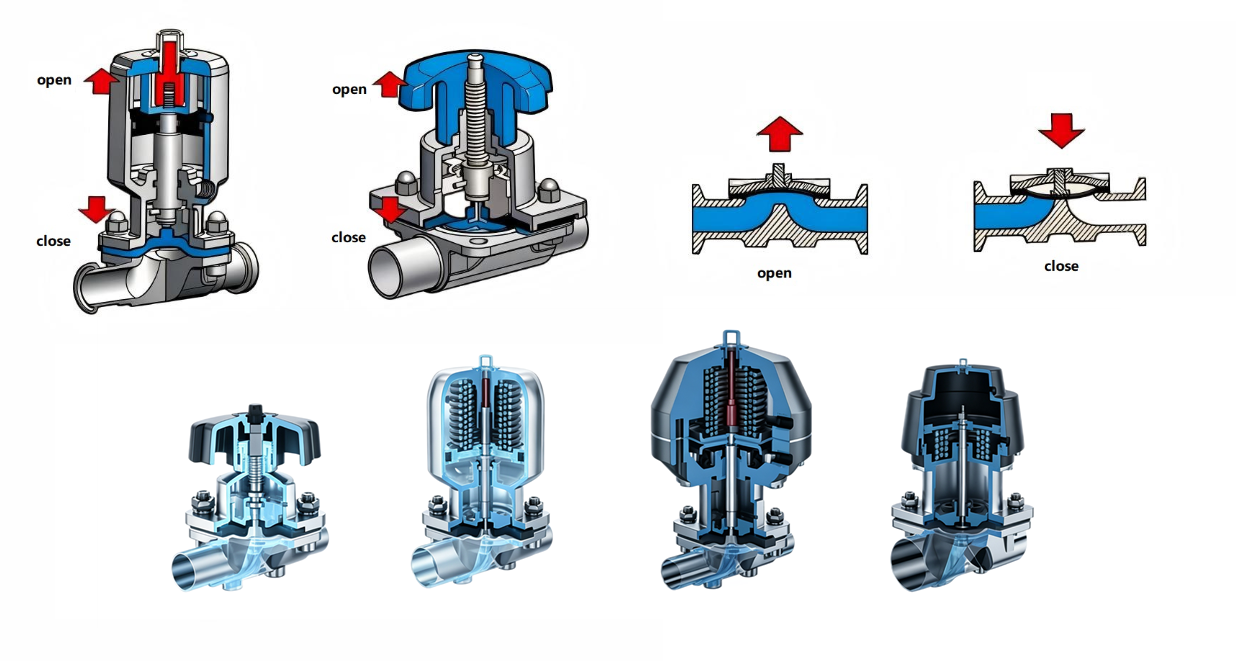
This sanitary clamp diaphragm valve uses the flexible diaphragm as the barrier seal. Vertical force from the actuator presses the diaphragm onto the valve weir to block fluid flow; releasing force allows the diaphragm to spring away and open the passage. Adopting standard tri-clamp ends, the valve can be detached from pipelines without cutting welds. The core isolation principle keeps process fluid separated from all upper mechanical moving parts, removing the need for packing seals. It supports manual or pneumatic actuator swap on the same valve body. Fluid only contacts the polished valve bore and diaphragm, so the whole valve can undergo in-place cleaning and sterilization without disassembly.
Why Choose KINGMAN
Flexible Order Volumes
Clamp diaphragm valve buyers can start with samples or smaller quantities before scaling an approved specification, useful for maintenance evaluation, distribution testing or new equipment development.
Seal and Alloy Choice
Select 304, 316L, AL6XN, Hastelloy or Alloy 22 with suitable seal materials according to cleaning chemistry, process media and sanitary operating requirements.
One-Source Component Buying
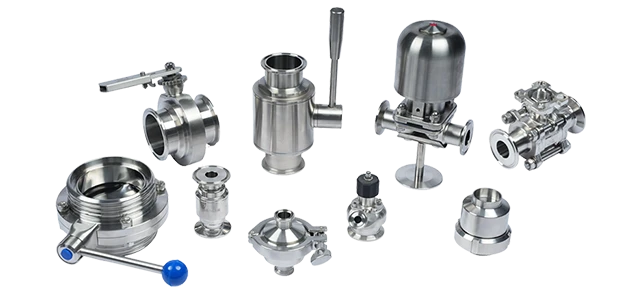
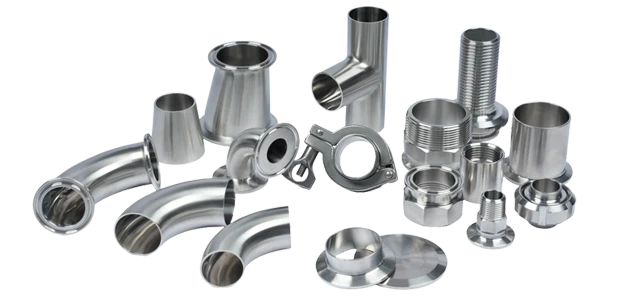
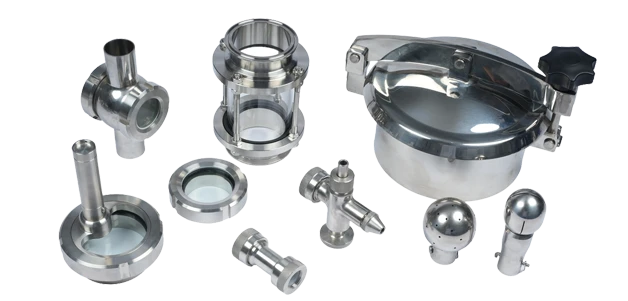
Valves, fittings, sight glasses, strainers and related sanitary components can be consolidated with diaphragm valve orders, simplifying procurement for skid builders and hygienic process projects.