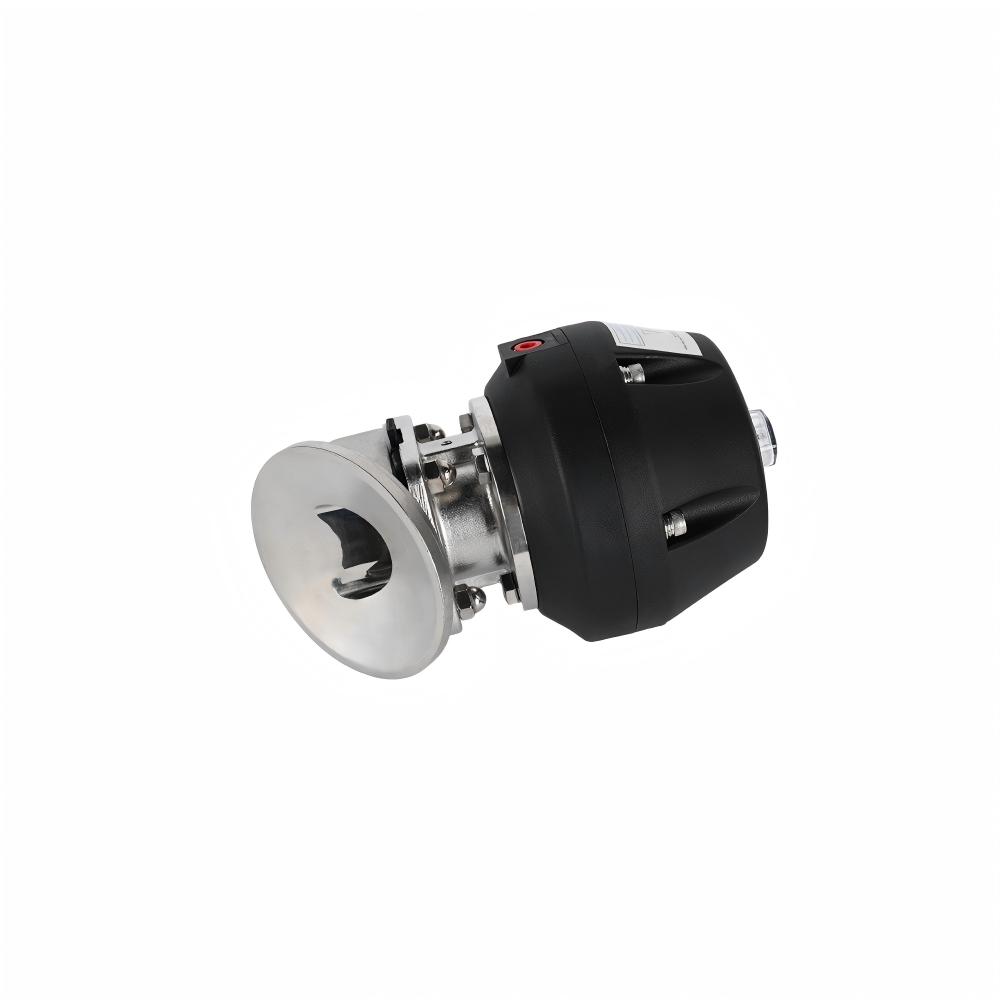
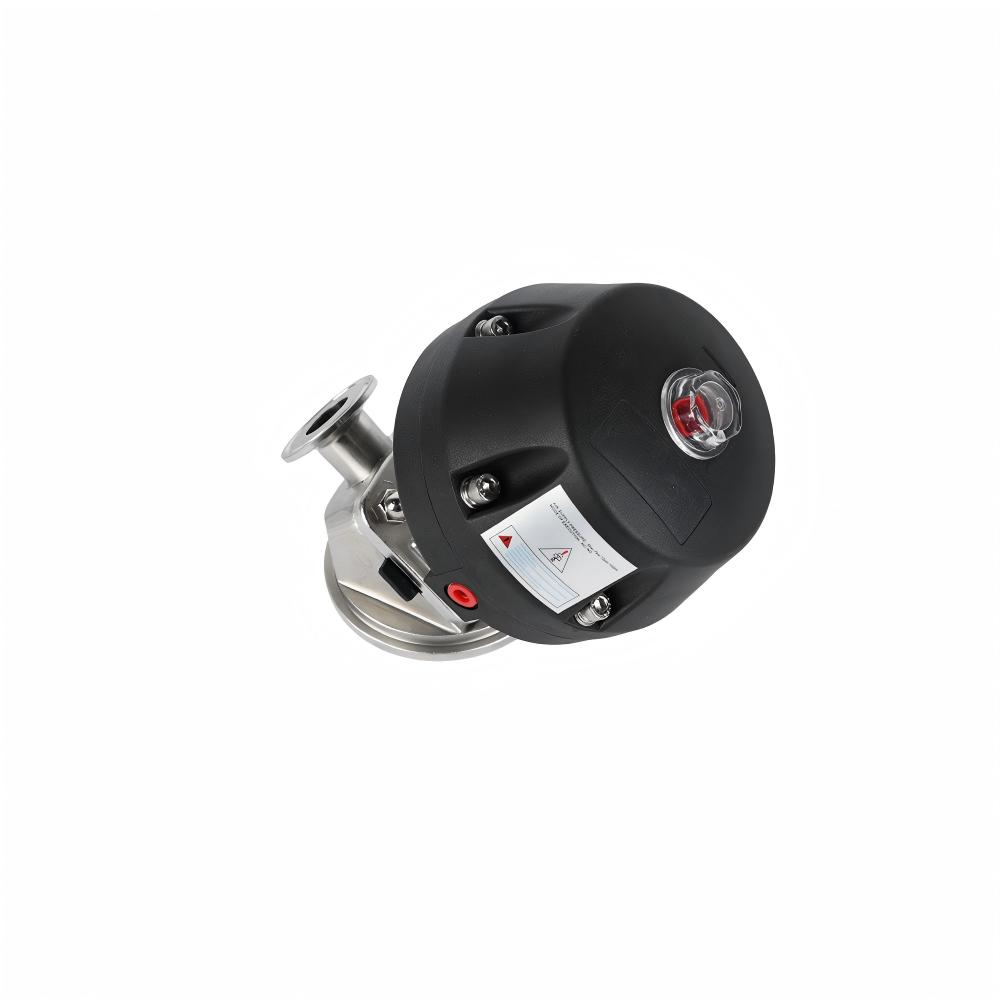
Sanitary Tank Bottom Diaphragm Valve
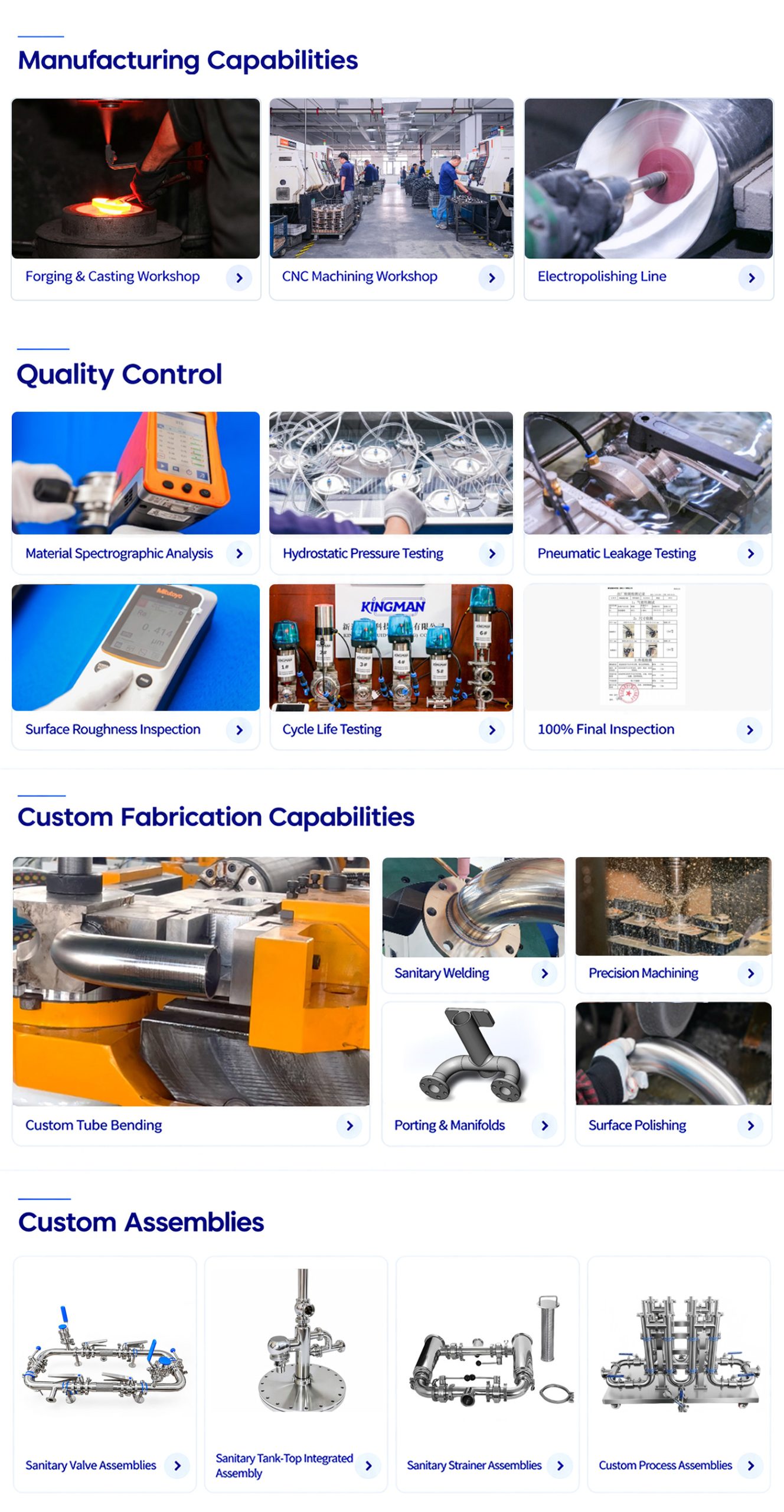
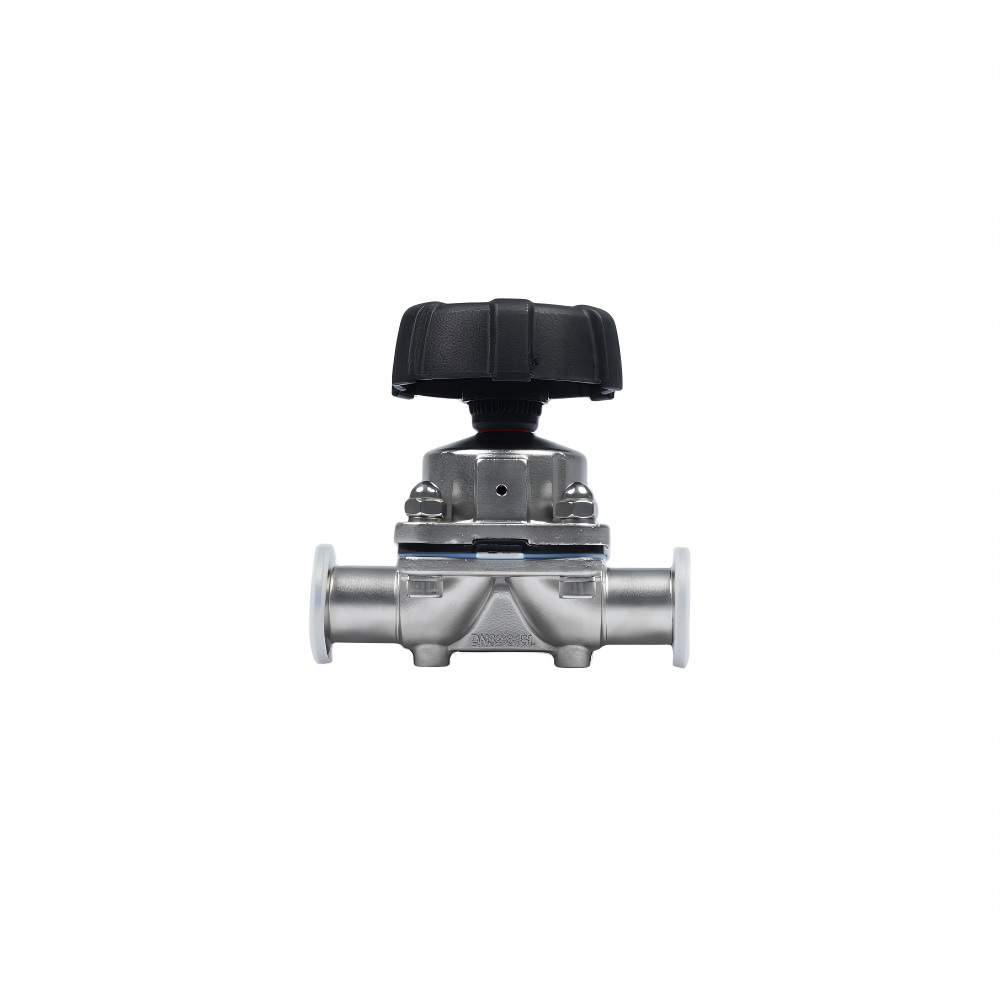
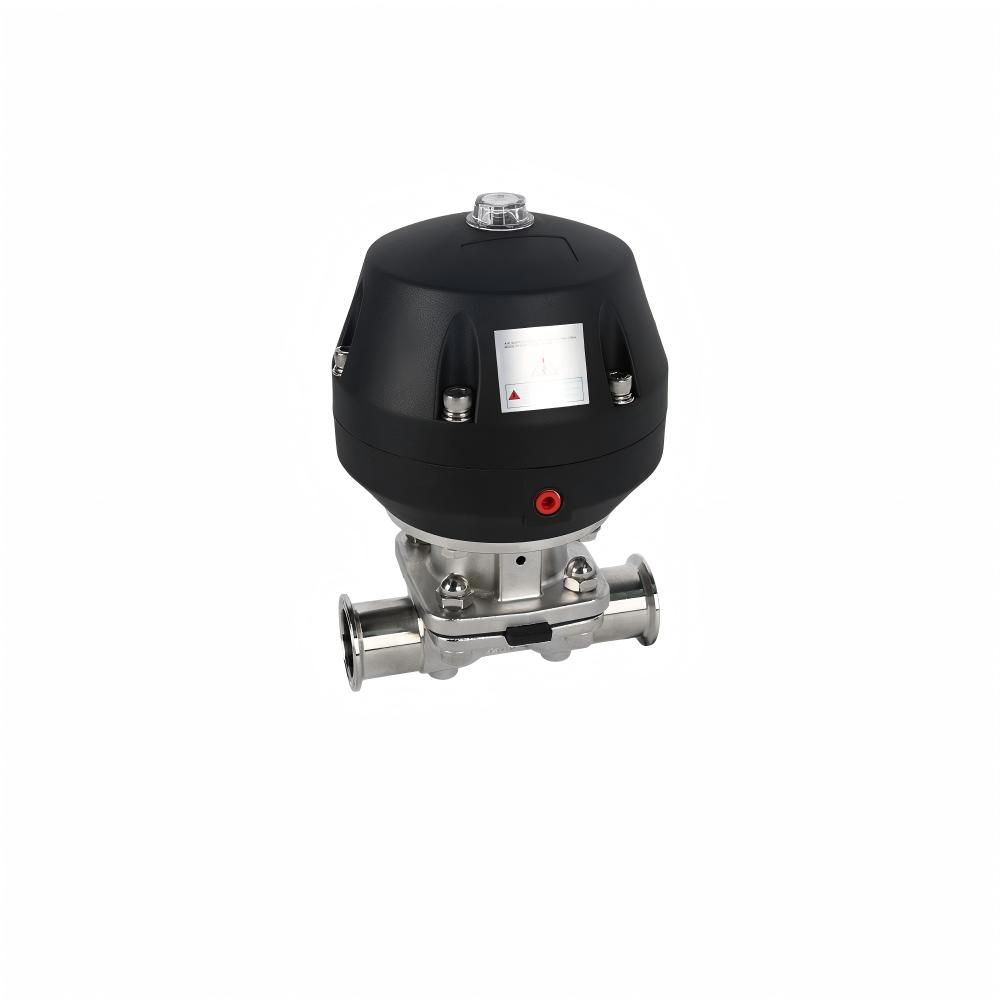
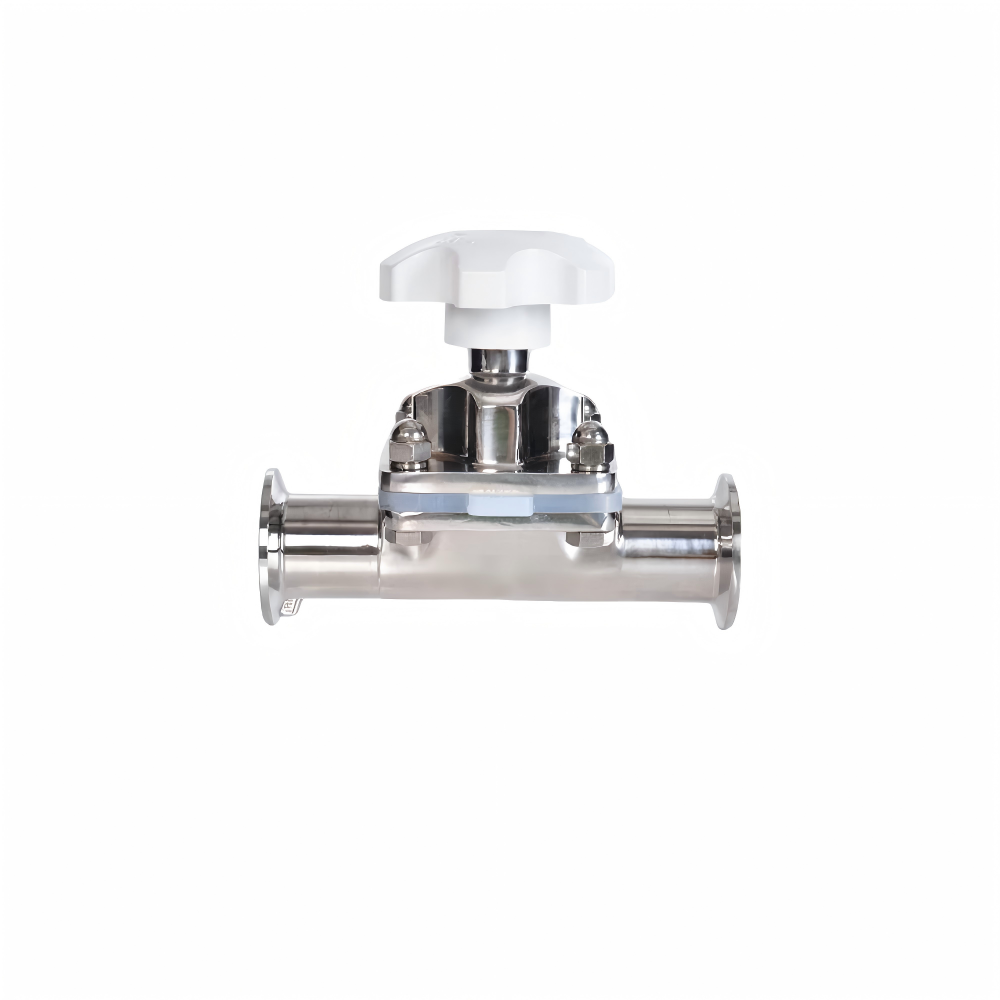
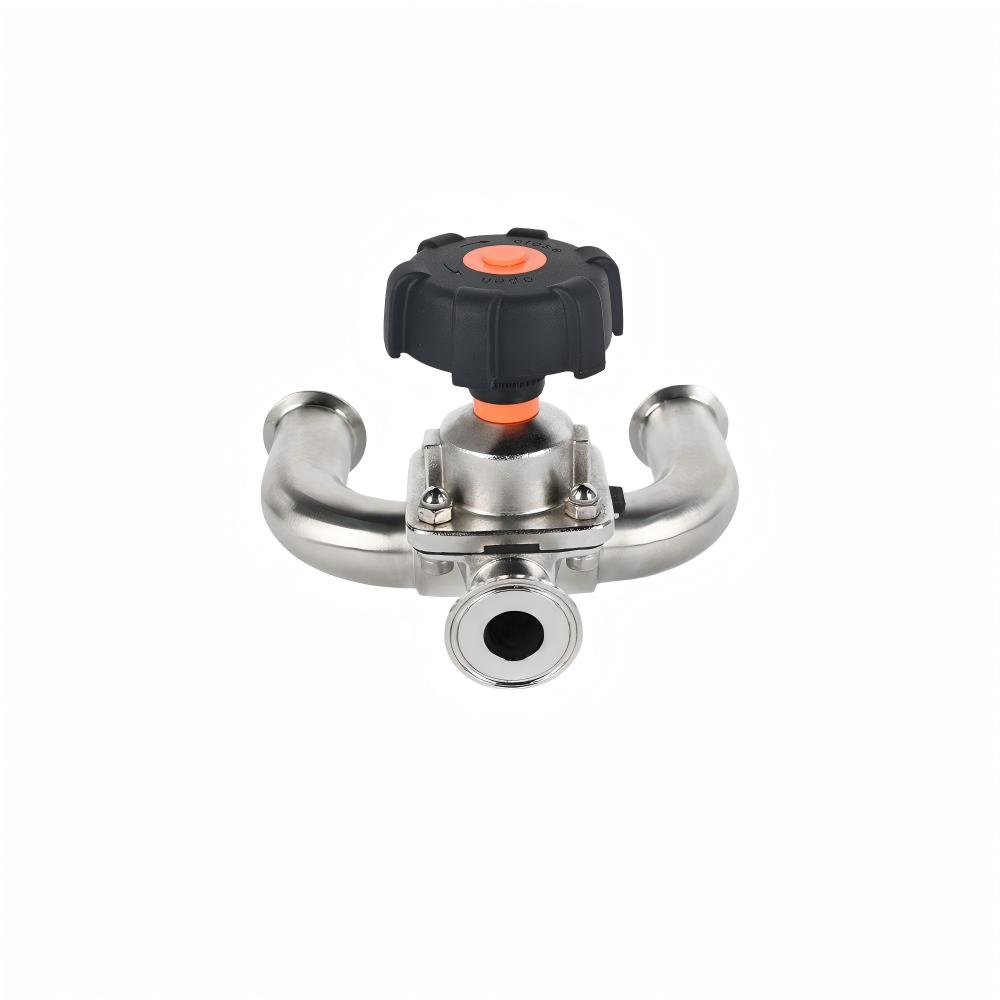
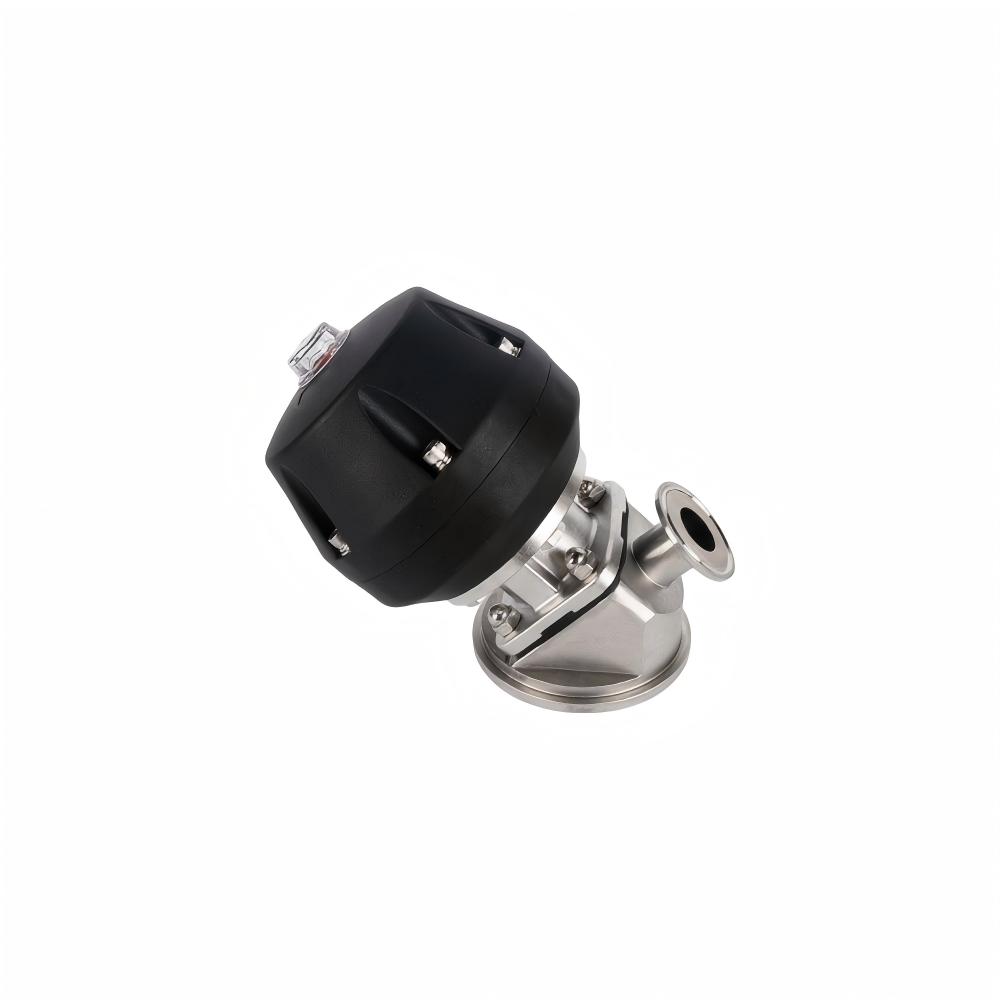
KINGMAN supplies tank bottom diaphragm valves. Developed for installation at the bottom of storage tanks. The embedded valve body greatly eliminates liquid accumulation dead corners at tank bottom and enables complete discharge of media inside tanks. The 316L stainless steel valve body adopts high-gloss polishing. Diaphragm seal isolates tank materials from external driving parts with zero packing leakage risk and supports CIP/SIP cleaning and sterilization. Suitable for batching tanks, fermenters, storage tanks and other equipment. Available in manual or pneumatic drive types for material discharge and tank cleaning. It is the preferred solution for fluid control at the bottom of sterile tank systems.
Specifications
| Parameter | Value |
|---|---|
| Product Type | Sanitary Diapharagm Valve |
| Size Range | DN15–DN100 (approx. 1/2"–4") |
| Body & Disc Material | 316L stainless steel |
| Seal Material | EPDM / EPDM+PTFE |
| Surface | Inner surface: Ra ≤0.5μm (SF1), Ra ≤0.375μm (SF4) , Outer surface: Sand blasting |
| Working Temperature | 150 °C |
| Max. Working Pressure | Max 10 Bar for DN15‑DN50; Max 6 Bar for DN65‑DN80 |
| Min. Working Pressure | Full vacuum (with EPDM seal) |
| Connection Standard | 3A / SMS / DIN / ISO /ASME BPE |
| Connection Type | Tri-Clamp / Weld / Threaded / Flange (please confirm) |
| Operation Type | Manual handle / Pneumatic actuator |
| Certification | ISO 9001, 3A,CE,EAC,health wading license |

Diaphragm
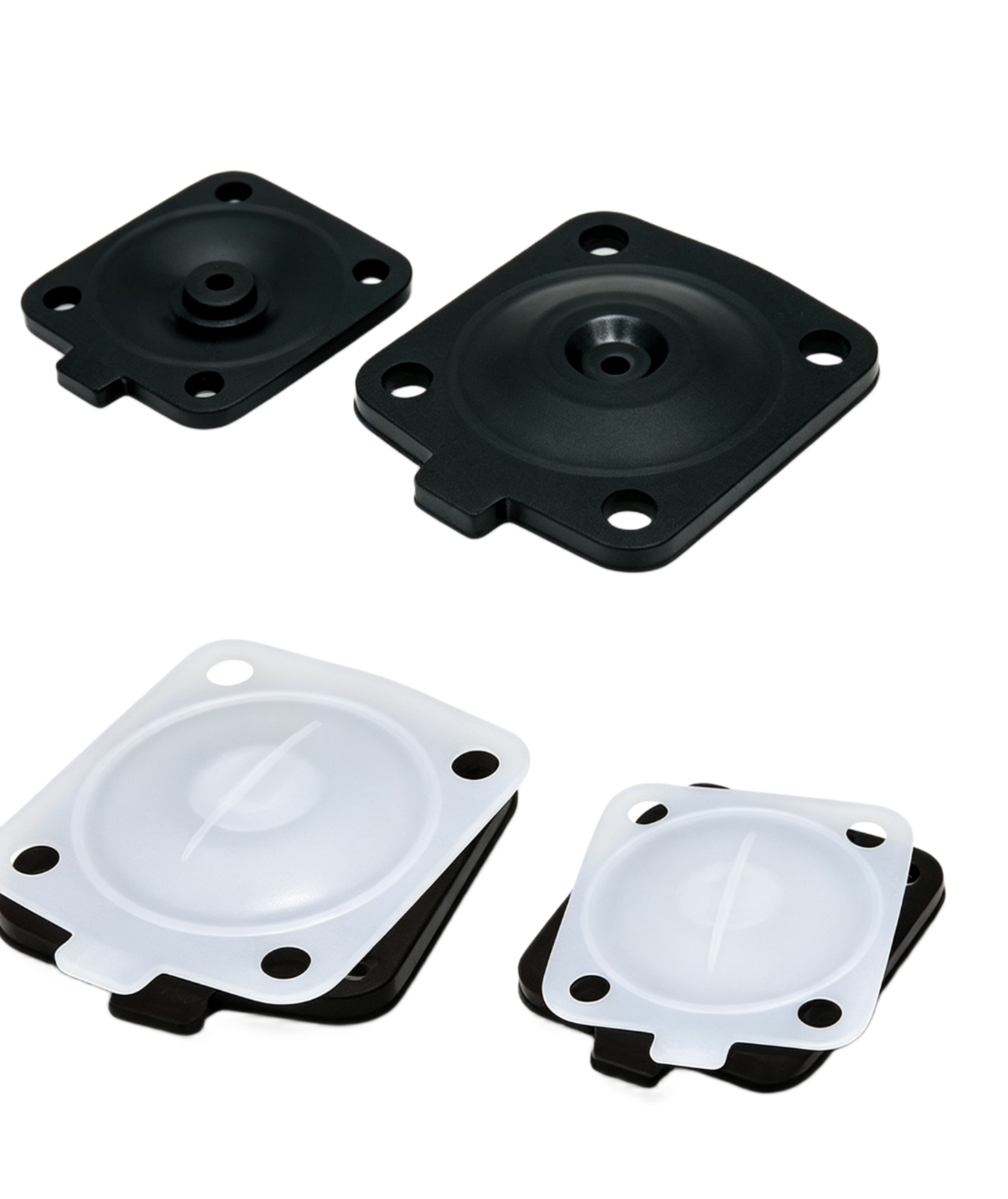
Different from the traditional diaphragm valve body, the aseptic diaphragm valve body has a sealing protrusion that tightly snaps on the inner diameter, which can reduce the annular gap between the diaphragm and the valve body. This feature of the diaphragm valve makes it particularly suitable for aseptic processe.
Diaphragm Material
Diaphragms are available in EPDM rubber and TFM rubber, with single and double diaphragms optional. The dual diaphragm design allows the two diaphragms to operate independently,which reduces tension caused by different thermal properties. Each application has different operating conditions and therefore different requirements for the diaphragm. To select the diaphragm that is best for you, consider the following factors: operating pressure, application temperature, process fluid. EPDM can be suitable for most application conditions, and some high-temperature conditions require the use of TFM material diaphragms.
Dimensions
3A / ISO Standard
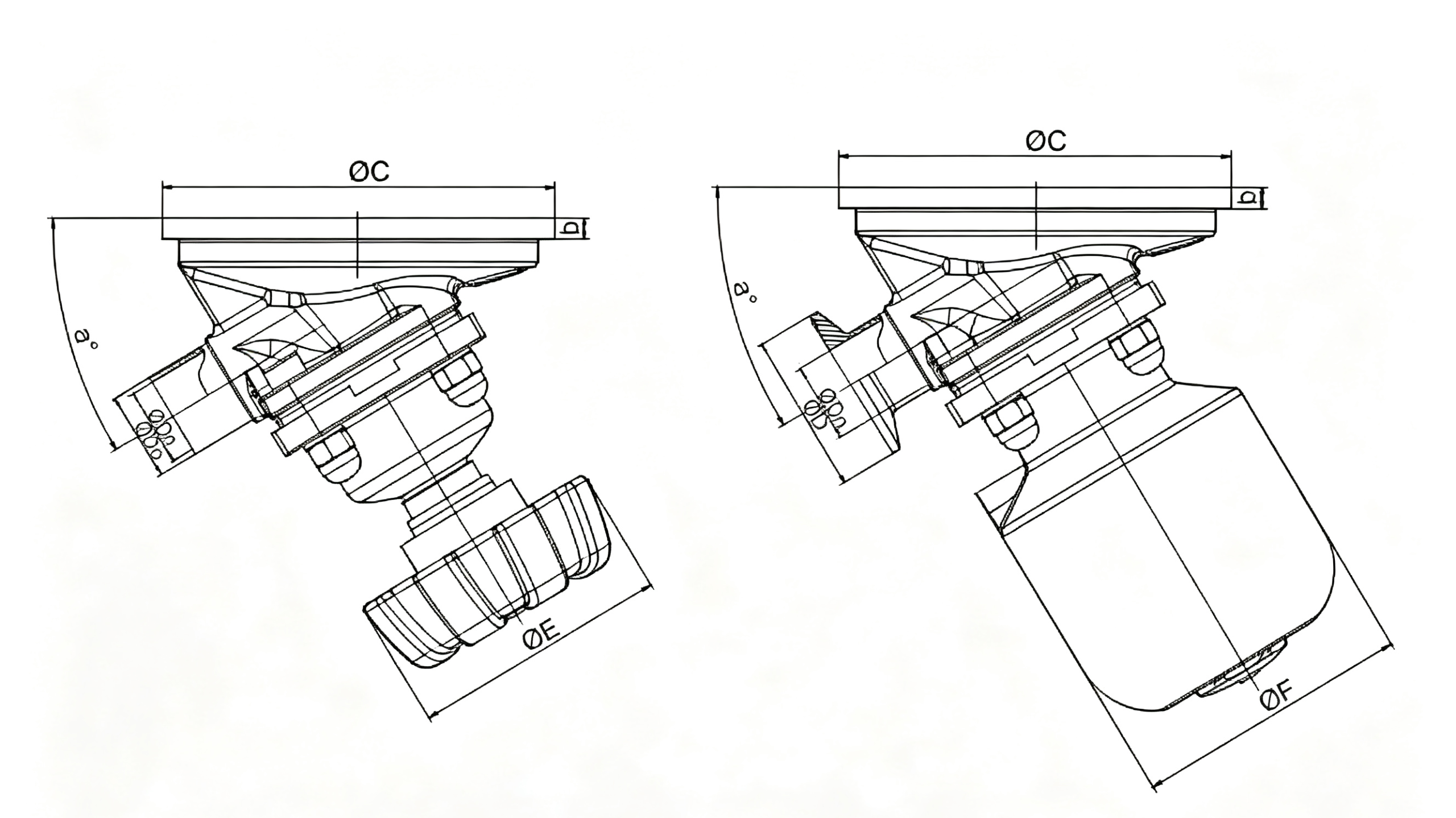
| Material Code | Size | D | Do | Dn | C | E | F | b | a |
|---|---|---|---|---|---|---|---|---|---|
| DMG73ACCHW6LEPP050 | 1/2" | 25.2 | 12.7 | 9.4 | 60 | 36 | 44 | 6 | 30 |
| DMG73ACCHW6LEPP075 | 3/4" | 25.2 | 19.1 | 15.8 | 85 | 65 | 58 | 6 | 25 |
| DMG73ACCHW6LEPP100 | 1" | 50.5 | 25.4 | 22.1 | 120 | 85 | 90 | 6 | 31 |
| DMG73ACCHW6LEPP125 | 1.25" | 50.5 | 31.8 | 28.5 | 160 | 105 | 112 | 6 | 30 |
| DMG73ACCHW6LEPP150 | 1.5" | 50.5 | 38.1 | 34.8 | 160 | 105 | 112 | 6 | 33 |
| DMG73ACCHW6LEPP200 | 2" | 64 | 50.8 | 47.5 | 180 | 125 | 138 | 6 | 33 |
| DMG73ACCHW6LEPP250 | 2.5" | 77.5 | 63.5 | 59.5 | 200 | 125 | 136 | 6 | 33 |
| DMG73ACCHW6LEPP300 | 3" | 91 | 76.2 | 72.6 | 250 | 210 | 168 | 6 | 33 |
| DMG73ACCHW6LEPP400 | 4" | 119 | 101.6 | 97.4 | 320 | 210 | 198 | 6 | 33 |
Features
- Tank-bottom embedded design fitting tank contour to eliminate liquid accumulation dead corners at the bottom of vessels.
- Straight low-resistance flow channel enables complete material drainage, reducing residual product to avoid bacterial growth and material waste.
- Diaphragm isolates tank medium from external driving parts, no packing leakage points and prevents backflow contamination into tank.
- High-gloss polished 316L valve body with good acid & alkali resistance and steam sterilization tolerance, suitable for mixing tanks and fermenters.
- Seamless connection between valve and tank without blind spots, fully compatible with CIP/SIP in-place cleaning and sterilization.
- Manual or pneumatic actuation optional to meet manual discharge or automated tank process control.
Working Principle
Mounted flush on the tank bottom, this diaphragm valve’s weir sits level with the vessel interior surface. The actuator applies vertical force to push the diaphragm onto the weir to seal the tank outlet. Retracting the actuator lifts the diaphragm from the weir and opens the straight flow path for draining tank contents. The flush-mounted design removes stagnant pockets at the tank bottom. The diaphragm isolates tank contents from all external drive components. When opened, the straight unobstructed channel allows nearly full discharge of tank media. During CIP/SIP cycles, cleaning fluid flows directly across the valve and tank junction. This working principle supports sterile material discharge and full vessel sanitization for mixing tanks and bioreactors.
Why Choose KINGMAN
Tank-Bottom Geometry Review
Tank bottom diaphragm valves can be engineered around vessel outlet position, connection dimensions and tank geometry, reducing field modification when valves must sit closely against process vessels.
Integrated Fabrication Capability
KINGMAN combines machining, welding, finishing and assembly within a 5,000㎡ facility, keeping more tank-bottom sanitary component work under direct manufacturing control.
Lifetime Technical Support
A one-year international warranty is backed by lifetime technical support, giving overseas buyers continued assistance with sanitary diaphragm valve specification, installation and replacement questions.